Balsamic Fiddleheads
Have you guys seen/heard of fern fiddleheads? I hadn’t until about this time a year ago. A couple of my girlfriends and I went up to Maine for a girls weekend to celebrate my 30th birthday. We went out for a nice dinner and I had a risotto dish with fiddleheads.

Since that first experience with this curvey veggie, I knew I wanted to find some to cook at home for Hubby. This past weekend, at my first trip to the grocery store after our trip, I stumbled upon a basket of fiddleheads. I instantly snatched some up and headed home.

Hubby was a bit skeptical when he saw me preparing these for dinner. Once he took a couple bites, he agreed that they were a special treat. The flavor is very mild, similar to the stalk of broccoli or asparagus, but even more subtle.

I researched some techniques for cooking fiddleheads online and came up with this recipe. The sweetness from the shallot and balsamic play really well with the subtle vegetables. We both enjoyed this dish so much that I made it the next night for dinner too!
Two Years Ago: Homemade Chicken Broth and Veggie Chicken Soup in the Crockpot
Three Years Ago: Mounds Cupcakes
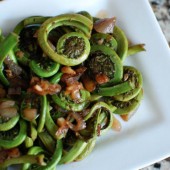


Balsamic Fiddleheads
Fiddleheads are a great spring/summer vegetable to mix things up with
Yield: Serves 2
Ingredients:
1/2 lb fern fiddleheads
1 Tbsp butter
1 shallot
2 cloves garlic
1 Tbsp balsamic vinegar
Directions:
Set a medium pot of water to boil.
While water is boiling, fill a medium bowl with cool water.
Using kitchen sheers, trim the ends of the fiddleheads and toss into water.
Swirl fiddleheads around in water to wash them. Leave in bowl until water is boiling.
Once water starts boiling, add fiddleheads to boiling water. Discard bowl of water and boil fiddleheads for 5 minutes. Fill the same bowl with clean cold water and set aside.
Meanwhile, melt butter over medium heat in a medium skillet. Once butter starts to foam, add shallots and stir to coat with butter.
After the fiddleheads have boiled for 5 minutes, remove them and plunge into the bowl of cold water to stop the cooking process.
Add the garlic to the skillet and cook until fragrant, about 30 seconds. Add the fiddleheads to the skillet and cook a few minutes.
Stir in balsamic vinegar and coat vegetables. Cook another minute and serve.


 I am Jen the Beantown Baker. Engineer by day and baking maven by night. Hubby serves as my #1 fan and official taste tester. We got hitched back in 2006. Barefoot. In the sand. With the waves crashing behind us. It was one of the best decisions we’ve ever made.